In
an order passed earlier this year, the Delhi High Court passed an ex-parte injunction against the
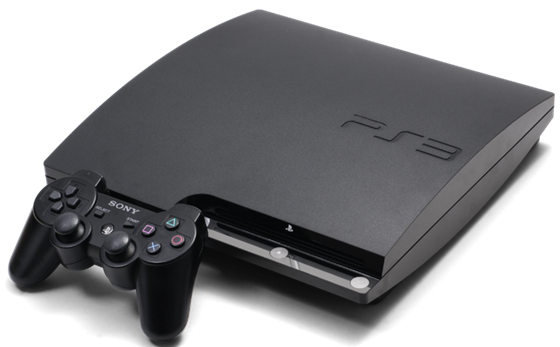
defendants for circumventing Technology Protection Measures (TPM’s) in the Sony
Playstation 3 and other Sony game consoles.
Given
that the order was granted after the Copyright (Amendment) Act, 2012 was passed
(although prior to notification), this is the first case to legally recognise
the introduction of digital locks in hardware or software to protect copyright
in India.
Importantly,
the defendants are restrained from engaging in associated acts including
“offering for sale” and “distributing modified game consoles”. This case, if the
order is appealed, will test the ‘fair balance’ that was sought to be achieved
with the importation of the DMCA-styled Section 65-A, which introducedanti-circumvention provisions, into Indian copyright law.
Section 65A and anti-circumvention
laws in India
The
insertion of anti-circumvention laws has been the subject of great debate since
its addition to the Indian Copyright Act. The first question – was it necessary
despite India not being a signatory to the WPPT and WCT (Internet Treaties)
that mandate such measures? And if necessary, is the provision in its present
form adept at striking the balance between copyright protection and the rights
of non-infringers?
Swaraj
Barooah has written a paper due for publication in the next issue of the NUJS Law Review where he argues that that since it is not the most efficient method
of protecting copyright, especially when there are other alternatives
available. Further, it appears to affect user rights by increasing transaction
costs, affecting privacy and also raising security concerns. Having read a draft of his paper I would agree that perhaps this provision will do more harm than good.
Legality of Jailbreaking
Playstations
The
court expressly references the anti-circumvention laws in the Copyright
Amendment Bill and authorises a Local Commissioner to seize necessary equipment
and determine if they are counterfeit.
The
lawyers for Sony essentially argued that the defendants were making ‘modifications and uploading pirated software
in the form of games’. This raises the obvious concern about the scope of the
term ‘modification’ and more fundamentally the question of whether a user
should be allowed to change software on a device he or she legally owns.
Legally
speaking, it is useful to study this act of jailbreaking in light of the newly
inserted S.65A and whether this amounts to copyright infringement.
The
order itself finds two ‘illegal acts’
– firstly, ‘modification without [Sony’s] consent’ and second, the introduction
of pirated copies of games into these machines without license from Sony. I understand
how the making of pirated copies could be a violation of Sony’s right to ‘reproduction’
of its games. But keeping that aside, I would argue that there does not appear
to be (and should not be) any legal
impediment to my right to change the underlying operating system, for example.
One
finds that the clause in the Act itself is careful to only allow the law to
operate if it ‘for the purpose of
protecting any of the rights conferred by the Act’. This was also an issue
raised by Pranesh Prakash of the CIS in an open discussion with Mr. Pravin
Anand (Anand & Anand was the law firm representing Sony) at a recent copyrightlaw conference as it is unclear what right is being violated when a user ‘modifies’
his or her PlayStation. Incidentally, all the videos from the NUJS-CUSAT conference are available on YouTube here.
Non-infringing Circumventions and Copyright
Office’s Role
My concern with the TPM provision, even if it allows for ‘fair use’ exceptions to override the clause like S.65A does, is the problem of deciding what constitutes fair use itself. Since courts in India are slow to react to technological challenges (and the more universal problem of law always playing catch-up to technology) it may be a good idea to invest the Indian Copyright Office with the task of reviewing exceptions to such anti-circumvention laws on a periodic basis. This would be identical to the current practice followed in the United States where the Librarian of Congress, every 3 years, announces the exceptions to the DMCA by establishing the ‘Rules for Exemptions Regarding Circumvention of Access-Control Technologies’.
Lastly,
I would also argue that the order goes far beyond what was required since it
restricts sale of modified consoles itself, despite there being no apparent
copyright infringement in doing so. A mere order restricting the making and
distribution of pirated games should have been sufficient in this case.
The
court, in my opinion, appears to rely on the ‘consent’ of Sony and what it considers to be legal or not and not
what the Act itself protects. Imagine if I had a Windows computer on which I
could only install Microsoft programs.
Or prevented from installing the Linux operating system on it and was forced to
use Internet Explorer for the rest of eternity. This is very much like that.
(Note:
A copy of the order is available here)
Interesting post Amlan. The order states issuing of Summons with deadline of 12 September, 2012. Any idea what is the current status of the case.
ReplyDeleteFurther, on an unconnected issue, the Local Commissioners in the order were mentioned to be eligible of Fees. Was wondering who would pay that? Plaintiffs in all probabilities, but yet..